Handing every staff member the same fluoro vest feels simple, but it rarely matches how a Perth business actually runs. A concreter on an exposed slab in February, a forklift operator in a warehouse and a driver hopping in and out of a ute all face different hazards, light and heat. Choosing hi vis workwear Perth crews will actually wear starts with the job, not the catalogue.
Quick answer: match hi vis to each role. Work out the hazards and lighting each person faces, choose the right AS/NZS 4602.1 class (day, night or both), then pick garments that suit their movement, hours and the Perth climate. Any outer layer worn on top must be hi vis too.
1. Start With Hazards and Light, Not the Catalogue
Walk the site and note who works near moving vehicles or plant, who starts before sunrise or finishes after dark, and who only visits operational areas now and then. Those answers decide the visibility class each role needs.
Under AS/NZS 4602.1, Class D garments use fluoro fabric for daylight, Class N relies on retroreflective tape for night work under lights, and Class D/N combines both for shifts that cross dawn or dusk. Your site rules and risk assessment have the final say.
2. Match the Garment to the Role
| Role | Light conditions | Gear that often suits | Watch for |
| Construction crews | Mostly daylight, early starts | Long-sleeve hi vis shirts, hi vis pants, jackets | Heat, sun coverage, freedom to lift |
| Warehouse staff | Indoor lighting, forklift traffic | Lightweight hi vis polos or shirts | Stretch for bending and reaching |
| Delivery drivers | In and out of vehicles, all hours | Hi vis polo plus a taped outer layer | Comfort when seated, seatbelt fit |
| Road and traffic crews | Day, night and changeover | Taped D/N shirts, pants and jackets | Visibility from every direction |
| Supervisors and visitors | Short, regular site walks | Taped vests or D/N shirts | Right sizes kept on hand |
These are common pairings only. Your own risk assessment decides the final kit.
Road crews deserve extra care. They often work beside live traffic and across shift changes, so check your traffic management plan and any road authority requirements. Hi vis is one layer of protection, never a replacement for barriers and traffic control.
For drivers, bulky vests get annoying fast behind the wheel. Many businesses issue a hi vis polo for everyday wear and a taped jacket or vest for loading docks and night drops.
3. Plan for Perth’s Summer and Winter
Perth summers push outdoor crews hard. Breathable high visibility work clothes, such as vented long-sleeve shirts, keep workers covered from the sun without cooking them. Shorts and short sleeves may not suit sites that require full coverage, so check first.
Winter brings dark 6 am starts, wind and rain. Hi vis jackets, hoodies and rainwear keep people warm and visible. The common mistake is throwing an ordinary dark jacket over a compliant shirt, which hides the very material that makes the worker visible.
4. Get the Fit Right for Everyone
Hi vis only works if people wear it properly. Oversized shirts snag on machinery, tight pants get swapped for comfier non-compliant ones, and men’s sizing doesn’t suit everyone. Stock women’s-cut high visibility workwear alongside men’s sizes, and check sleeve and leg lengths for taller and shorter staff.
5. Inspect, Wash and Replace on Schedule
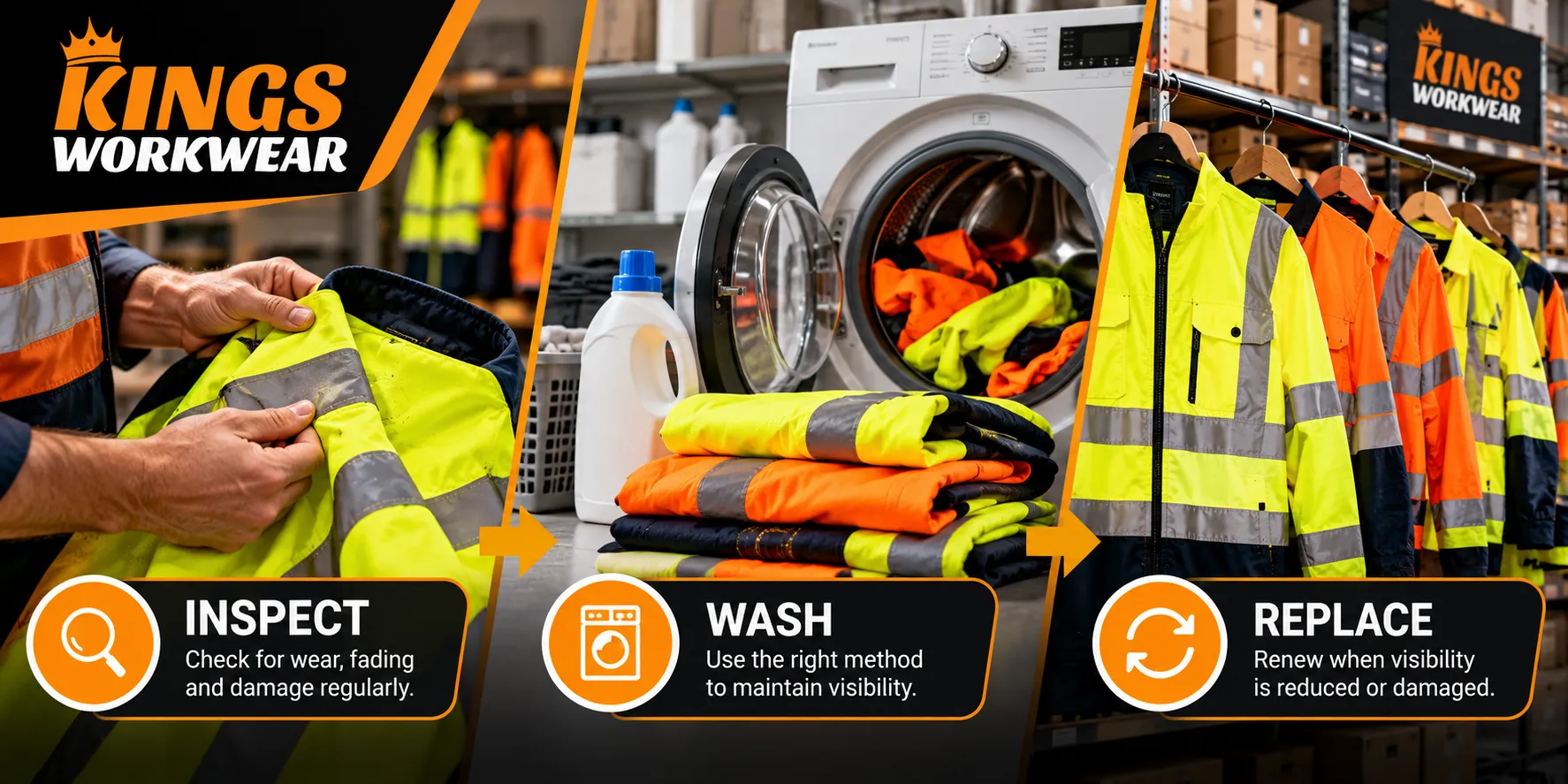
Fluoro fabric fades in UV, and reflective tape cracks or peels with washing and wear. Follow the care label, issue enough sets to cover normal laundry cycles, and check garments regularly. Replace anything faded, torn, heavily stained or with damaged tape. Keeping a record of the approved styles and classes for each role makes reorders consistent.
Why Kings Workwear Suits Perth Teams
Kings Workwear sells hi vis workwear in Perth from its Southern River store and online. The range covers shirts, polos, singlets, vests, hoodies, jackets, rainwear, pants and overalls, plus flame and arc rated and rail workwear, in men’s and women’s fits from brands including JB’s Wear, Bisley, Syzmik and Hard Yakka. Confirm each garment’s class against your site requirements before ordering.
Frequently Asked Questions
Do all employees need the same hi vis workwear?
No. High visibility work clothes should match each role’s hazards, hours and lighting. A warehouse picker, a road crew member and an occasional site visitor may need different garments and classes. Base the choice on your workplace risk assessment, not one standard uniform.
Which hi vis class do night-shift workers need?
Night workers usually need Class N or Class D/N garments under AS/NZS 4602.1, because retroreflective tape is what shows up under headlights and site lighting. If a shift runs across dawn or dusk, Class D/N covers both conditions.
What hi vis is best for warehouse workers?
Lightweight hi vis polos or shirts with room to bend and reach usually suit warehouse work. Add reflective tape where lighting is poor or forklifts operate, and always follow the site’s own PPE rules.
Can you wear a jacket over hi vis clothing?
Only if the jacket is hi vis itself and meets the class your site requires. An ordinary jacket hides the fluoro and reflective material underneath, so the worker is no longer visible. Hi vis jackets, hoodies and rainwear solve this in cold or wet weather.
How often should hi vis workwear be replaced?
There’s no fixed interval. Replace hi vis when the fluoro has faded, the reflective tape is cracked or peeling, or the garment is torn or heavily stained. Regular inspection and following the care label help it stay effective for longer.
Where can I buy hi vis workwear in Perth?
Kings Workwear in Southern River stocks hi vis shirts, polos, vests, jackets, hoodies, pants and rainwear in men’s and women’s fits. Pop in to check fit and sizing, or order online for delivery.
Final Word
The right high visibility workwear program fits the work, not just the budget. Look at each role’s hazards, hours and climate, choose the class and garment that suit, and replace gear before it fades. Your team stays visible, comfortable and more likely to wear it properly.