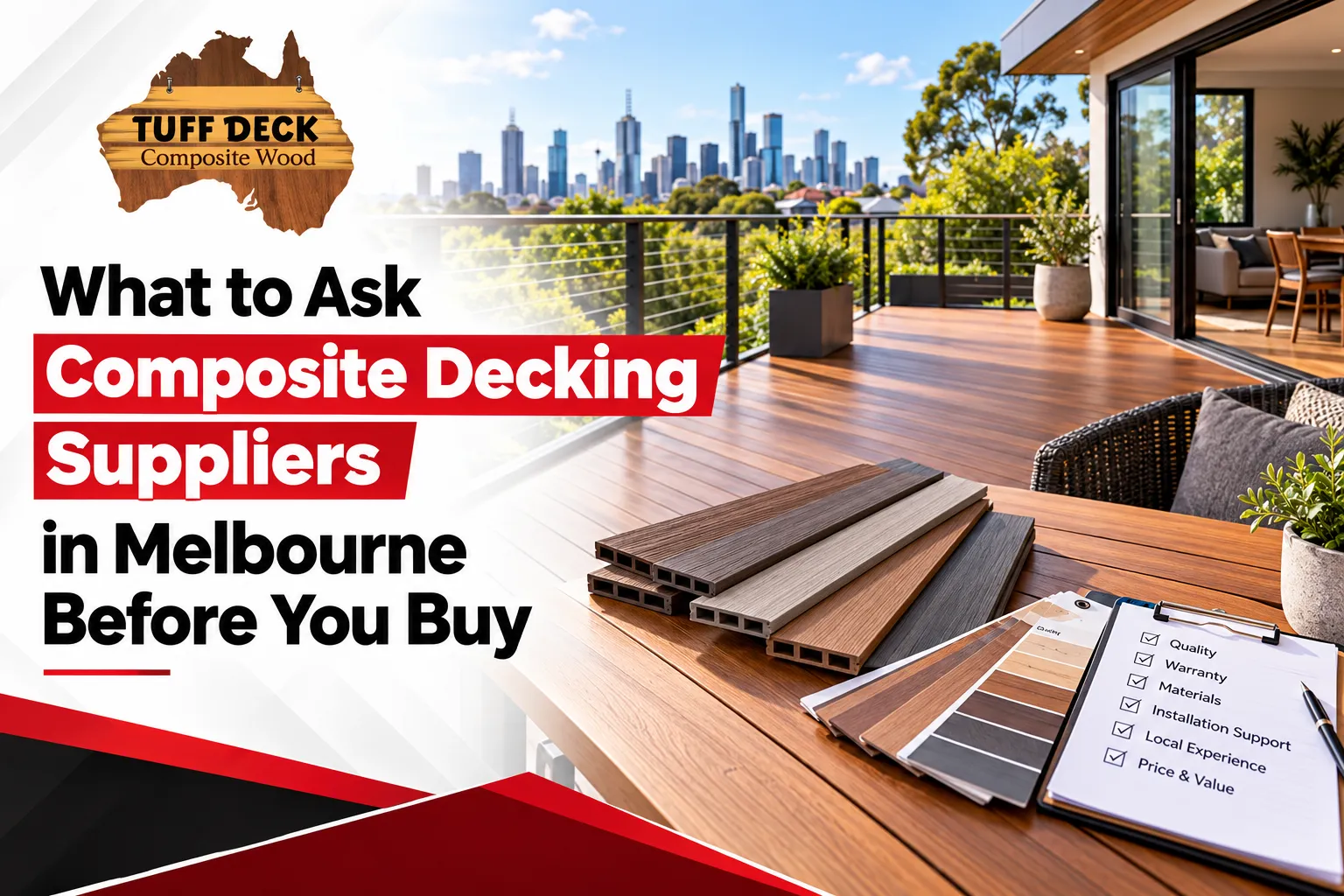
Type “composite decking Melbourne” into Google and you’ll get pages of suppliers promising low-maintenance boards that look like timber. The photos often look identical. The products behind them often aren’t.
Two boards with the same grey finish can differ in core material, surface cap, thickness and warranty, and in how they handle a 40-degree January afternoon. Quotes hide surprises too, because a cheap board price means little until fixings, framing and delivery are added.
Before you pay a deposit, put these seven questions to every supplier on your shortlist.
1. Do you make the boards, or buy them in?
Most decking suppliers Melbourne homeowners deal with fall into three groups: manufacturers, importers and resellers. None is automatically better, but the answer changes what each can do for you.
A manufacturer can usually explain exactly how a board is made, cut to custom lengths and keep matching stock for repairs years later. A reseller may carry several brands but relies on someone else for specifications and warranty claims.
2. Can I see the technical data sheet?
A good supplier hands this over without fuss. Look for:
- capped or uncapped surface (a cap is a protective outer shell that resists stains and fading)
- solid or hollow profile, and board thickness
- recommended joist spacing and expansion gaps
- expected colour change under UV
If all you get is “premium” and “maintenance-free”, that’s an answer in itself.
3. Can I take samples home?
Showroom lighting flatters everything. Take two or three samples home and look at them outside, in morning shade and afternoon sun, next to your brickwork and paving.
While they’re out there, touch them on a hot day. Darker boards get noticeably hotter in direct sun, which matters if kids or swimmers will walk on the deck barefoot.
4. What exactly is in the quote?
This is where most comparisons fall apart. Some composite decking suppliers quote per lineal metre, some per square metre, and some quote boards only.
Ask for an itemised quote covering boards, clips and screws, subframe, fascia, delivery, removal of the old deck and labour. Then compare totals, not headline board prices. A board that’s $2 a metre cheaper can end up dearer once accessories are added.
5. What slip and fire ratings can you prove?
“Non-slip” is a claim, not a rating. In Australia, slip resistance is classified under AS 4586, with results such as P3 or R10. Ask for the test report and check it covers the exact board and finish you’re buying.
If your block sits in a bushfire-prone area, ask whether the board has been tested for your site’s Bushfire Attack Level (BAL). Ratings vary widely between products.
6. Do you cut to length?
Standard boards of around 5.4 metres suit many decks, but long runs can leave visible joins and extra offcuts. Some manufacturers cut boards to your measured length, which means fewer joins and less waste.
Ask about maximum length, lead time and whether custom boards can be returned. Ask, too, whether they’ll check your measurements and calculate quantities for stairs, borders and cutting allowance.
7. What does the warranty cover, and who installs?
Most established composite brands sold in Melbourne advertise 25-year residential warranties, and a few go to 30. The terms matter more than the number. Ask whether fading and staining are covered and what proof a claim needs.
Then ask who installs: the supplier’s own team, a subcontractor or you. A product warranty won’t cover a badly built subframe, so ask about workmanship cover too. Both sit alongside your rights under Australian Consumer Law.
Where Tuff Deck fits
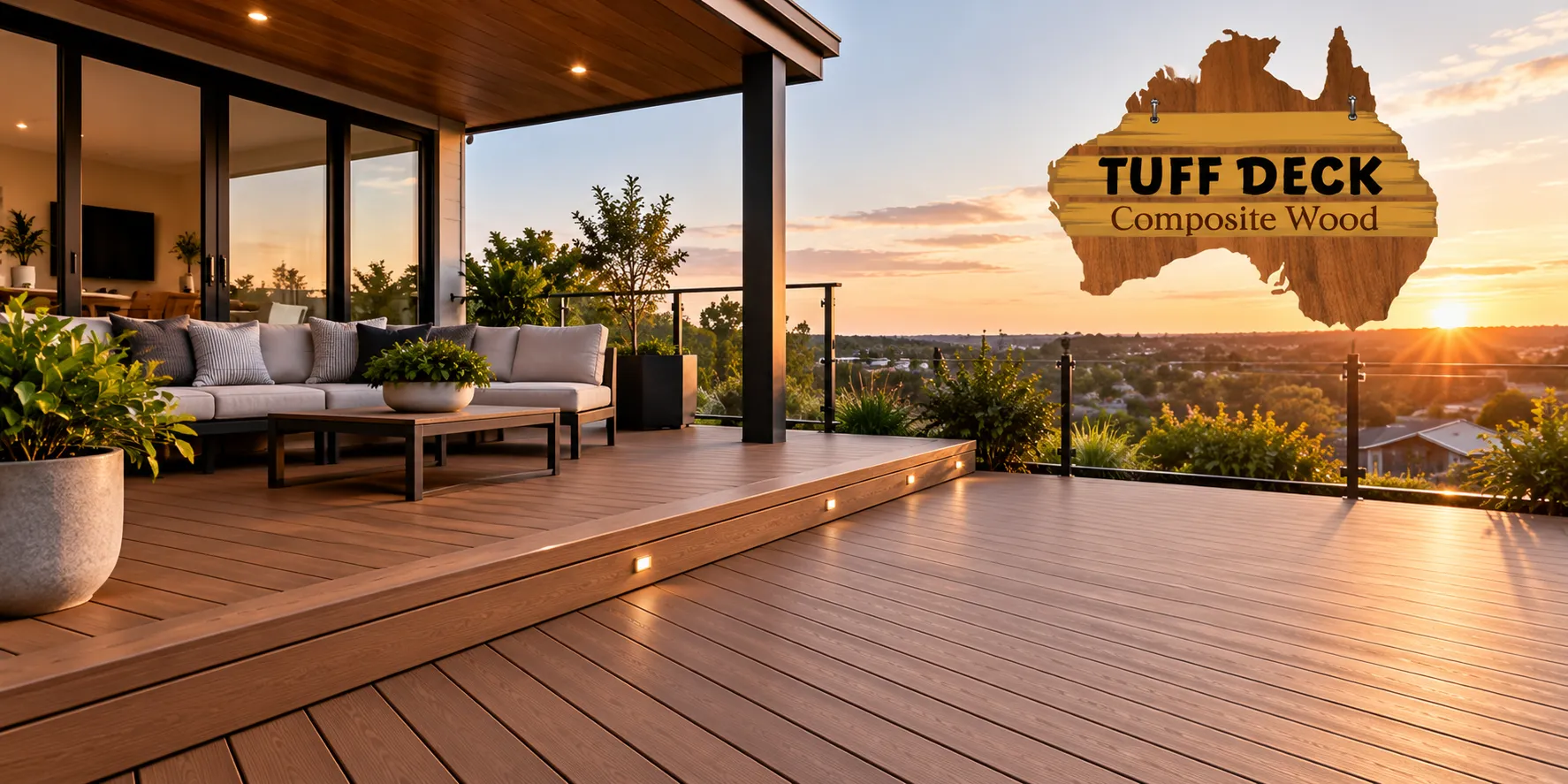
If you’re comparing options for composite decking in Melbourne, Tuff Deck is worth a look. The company makes, supplies and installs composite decking from Dandenong South. Its board range covers seven colours, from Grey and White to Aussie Teak and Caramel, with custom lengths on selected boards. You can order free samples, request a quote or visit the showroom at 51–53 Williams Road.
A good supplier won’t mind any of these questions. If one gets vague about specs, ratings or what’s in the price, you’ve learned something about their after-sales service too.
Frequently asked questions
How do I choose a composite decking supplier in Melbourne?
Compare every supplier on the same five things: a technical data sheet, physical samples, an itemised quote, slip and fire test reports, and written warranty terms. Also ask whether they manufacture, import or resell, and whether they install. The right supplier answers all of this clearly before asking for a deposit.
How much does composite decking cost in Melbourne?
At the time of writing (October 2026), imported composite boards from Melbourne suppliers are advertised at about $10 to $15 per lineal metre, or roughly $70 to $110 per square metre for boards alone. Fixings, framing, fascia, delivery and labour come on top, so compare installed prices per square metre.
Is composite decking better than merbau?
Composite decking needs far less upkeep than merbau. Merbau usually needs oiling at least once a year and can bleed tannins that stain paving, while composite only needs regular washing. Merbau gives a natural timber look and often costs less upfront; composite can work out cheaper over time once oil and labour are counted.
Does composite decking get hot in summer?
Yes. Composite decking can get hot in direct sun, and darker colours heat up more than lighter ones. On a Melbourne summer afternoon, a dark board in full sun can be uncomfortable for bare feet. For pool surrounds or west-facing decks, choose a lighter colour and test samples in the sun first.
Can composite decking be used in bushfire-prone areas?
Only if the specific board has been tested for your site’s Bushfire Attack Level (BAL). Ratings vary widely between composite products. Confirm your property’s BAL with your council or builder, then ask the supplier for test evidence against AS 3959 before you buy.
How long does composite decking last?
Quality capped composite decking can last 25 years or more when it’s installed and maintained correctly. Most established brands offer 25-year residential warranties, and some offer 30. Real lifespan depends on the board, subframe ventilation, sun exposure and cleaning, so read the written warranty rather than relying on the headline number.