According to the Bureau of Meteorology, Perth Metro averaged a daily maximum of 31.6°C over summer 2025–26, and Christmas Day 2025 hit 42.1°C, the city’s second-hottest Christmas on record. A security camera has to keep recording through all of it. If you’re choosing a CCTV camera Perth summers won’t knock offline, it helps to know what heat actually does to the equipment and how good installation keeps it working.
Can Extreme Heat Damage CCTV Cameras?
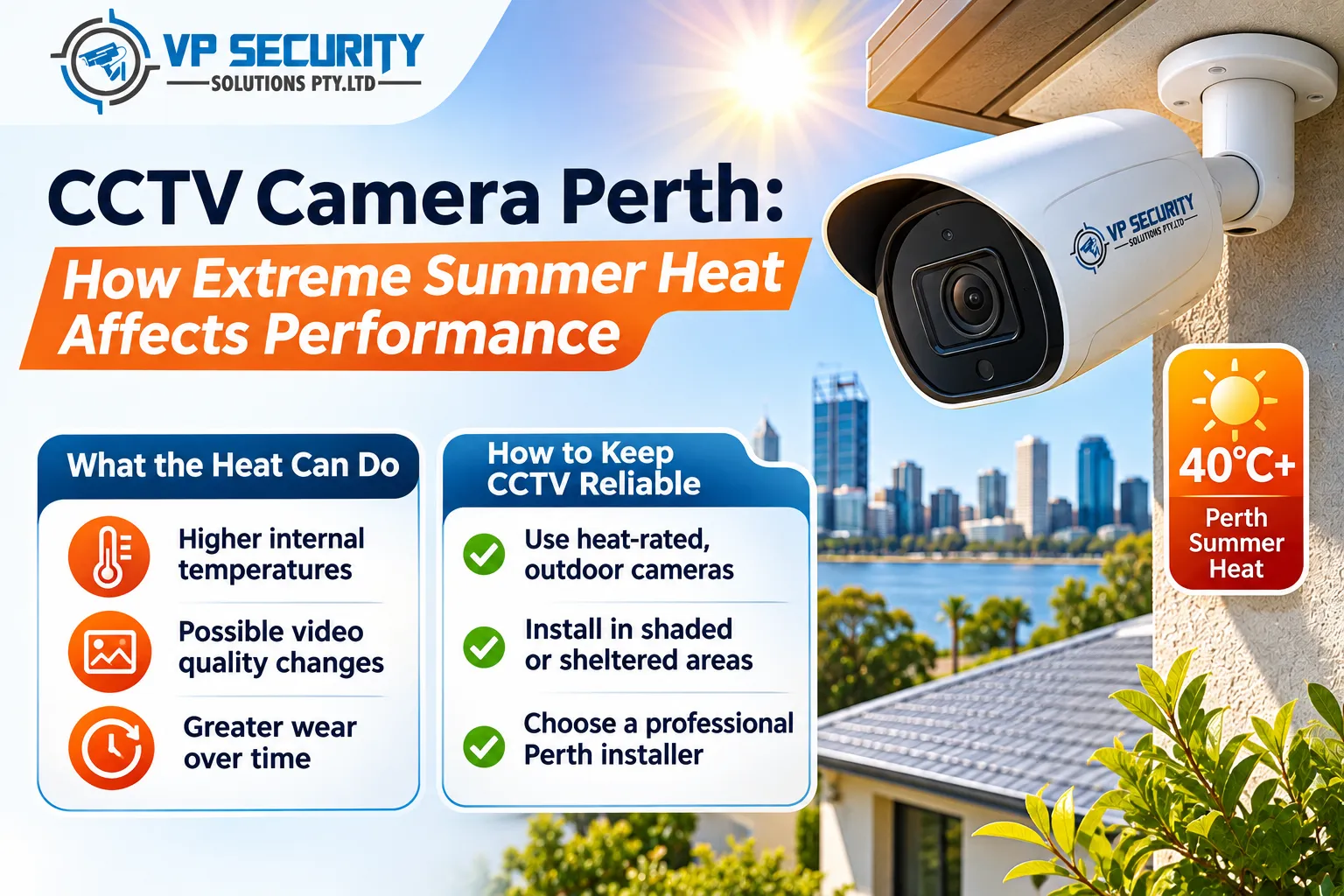
Yes, but only when a camera runs beyond its rated temperature range or is installed in a spot that traps heat. A hot day on its own won’t wreck a well-made outdoor camera.
Many Dahua WizSense models, for example, list an operating range of -30°C or -40°C up to +60°C on their datasheets. That upper limit sounds generous until you remember a camera is often sitting in full sun on a wall that’s far hotter than the air around it. Ratings vary between models, so always check the datasheet rather than assuming.
What Happens When a Camera Overheats?
An overheating camera rarely fails all at once. More often, it starts rebooting on its own in the hottest part of the afternoon, which leaves gaps in your footage exactly when the property is quiet. Over months, repeated heat stress wears out internal components, and cheap cables or connectors can crack or loosen, causing dropouts that come and go.
Why Does Direct Sunlight Matter More Than Air Temperature?
The temperature on the weather report isn’t the temperature your camera feels. A camera mounted on a west-facing brick wall, under a metal awning or next to a dark Colorbond fascia soaks up heat radiating off those surfaces. Tight corners and enclosed soffits also stop air moving, so heat builds up instead of escaping.
The fix is careful placement. A roof overhang or eave can shade a camera through the harshest hours without spoiling its view. Keep cameras away from air-conditioner condensers, exhaust vents and anything else that pumps out warm air. Shade helps, but never at the cost of coverage.
Does Summer Heat Affect CCTV Image Quality?
Heat alone doesn’t make footage blurry. Image sensors are designed to work across a wide temperature range, though a very hot sensor can produce more visual noise, especially in low light.
The bigger summer image problem is actually the sun. A camera looking from a shaded porch out to a blazing driveway struggles to expose both, giving you a dark doorway or a washed-out street. Cameras with true Wide Dynamic Range (WDR) balance these extremes much better, and careful aiming helps too.
Dust is the other culprit. Perth’s dry, windy months leave a fine film on lenses and domes, and when low sun hits a dirty cover, the picture fills with glare. A gentle clean with a soft microfibre cloth every few months makes a visible difference.
What Should You Look for in a Camera Built for Perth?
When comparing CCTV security Perth options, look past resolution and smart-detection claims and check whether the equipment suits the conditions it’ll face.
First, read the operating temperature range on the datasheet. The cheapest models often have the narrowest margins. Second, check the Ingress Protection (IP) rating. IP66 or IP67 means strong resistance to dust and water, but it says nothing about heat tolerance, so don’t treat it as a heat rating. Third, choose a metal or light-coloured housing, which handles sun better than dark plastic.
Don’t forget the recorder. A Network Video Recorder (NVR) is usually rated for a much narrower temperature range than outdoor cameras, and Perth roof spaces can climb well past 50°C in summer. Keep the NVR indoors in a ventilated spot, never in the ceiling or a sealed cupboard. Outdoor cabling should be UV-stabilised and run through conduit, since Perth sun will crack ordinary cable sheathing within a few years.
How Can You Protect Your CCTV System During a Heatwave?
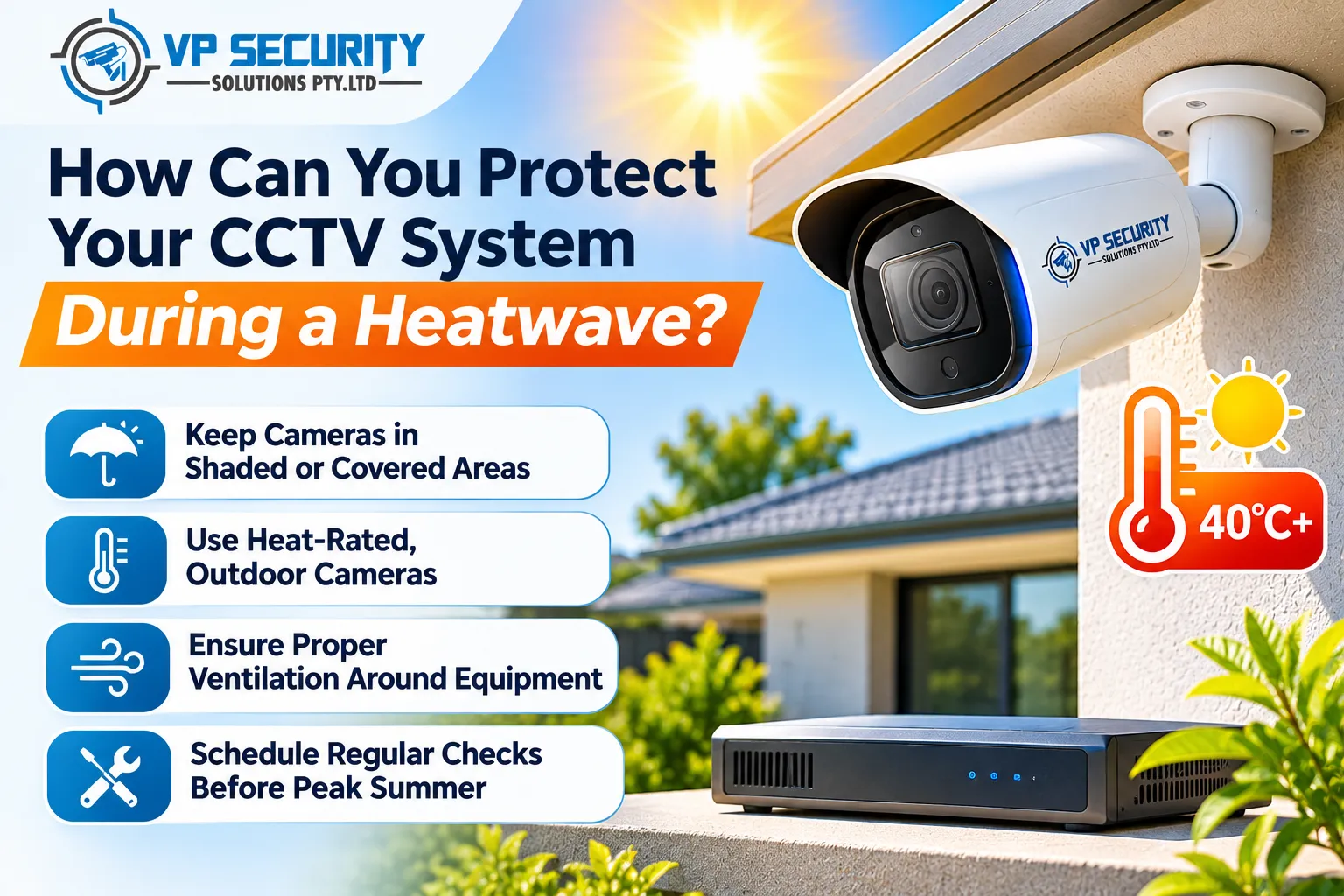
Start with a quick check in late spring. Look for cracked domes, loose brackets and brittle or faded cable, and fix problems before the first heatwave.
Keep the recorder’s vents clear. Every few weeks, scroll back through recent footage to confirm every camera is recording and timestamps are correct. A system can look fine on live view while quietly failing to record.
If a camera keeps dropping out on hot afternoons, note the dates and times. That record helps an installer work out whether the cause is heat, power, cabling or the network. Don’t open a sealed outdoor housing yourself unless the manufacturer allows it, as that can void the warranty and let in dust.
Why Does Professional Planning Matter in Perth?
A reliable system depends on more than impressive specs. A good installer looks at the whole site: which walls catch afternoon sun, where cables can run safely, and where the recorder will stay cool. This matters most for warehouses, workshops and car parks, where cameras often sit near hot metal roofs and exposed steel. Well-planned CCTV systems Perth businesses rely on are designed around these conditions from the start, which means fewer callouts and fewer gaps in footage.
Why Choose VP Security Solutions?
VP Security Solutions installs CCTV for homes and businesses across Perth, with a focus on Dahua camera systems. Their packages include AcuPick and TiOC PRO kits with 6MP AI cameras, and every quote follows a free site check. That visit is where heat exposure, mounting positions and recorder placement get sorted out.
Frequently Asked Questions
Can CCTV cameras work in 40°C heat?
Yes. Most quality outdoor cameras are rated to around +50°C or +60°C. Direct sun and hot surfaces can push a camera’s real temperature above the air temperature, so check the datasheet and choose a shaded mounting spot where possible.
Should CCTV cameras be installed in the shade?
Ideally, yes, as long as the shade doesn’t block the view. An eave or overhang that blocks harsh afternoon sun reduces heat stress and glare. Coverage always comes first.
Can heat affect a CCTV recorder?
Yes. NVRs usually tolerate much less heat than outdoor cameras. A recorder in a hot roof space or an unventilated cupboard can overheat, freeze or stop recording, so keep it indoors in a cool, ventilated spot.
Why does my CCTV camera restart on hot days?
Restarts in hot weather usually point to overheating, a struggling power supply or a weak connection. Note when it happens and ask your installer to check the camera, PoE switch and cabling.
Does an IP67 rating mean a camera is heat-proof?
No. An IP rating only measures protection against dust and water. Heat tolerance is listed separately as the operating temperature range.
Final Thoughts
Perth heat won’t destroy a well-chosen, well-installed camera, but it will expose a poor one quickly. Choose equipment with a solid temperature rating, mount it out of the harshest sun, keep the recorder cool and check your footage regularly through summer.
Contact VP Security Solutions to book a free site check and find a CCTV system built for Perth conditions.