For months, your deodorant has been the most reliable part of your morning. Then one day your underarms start itching. A few days later they’re red and sore. You haven’t switched brands, so what’s going on?
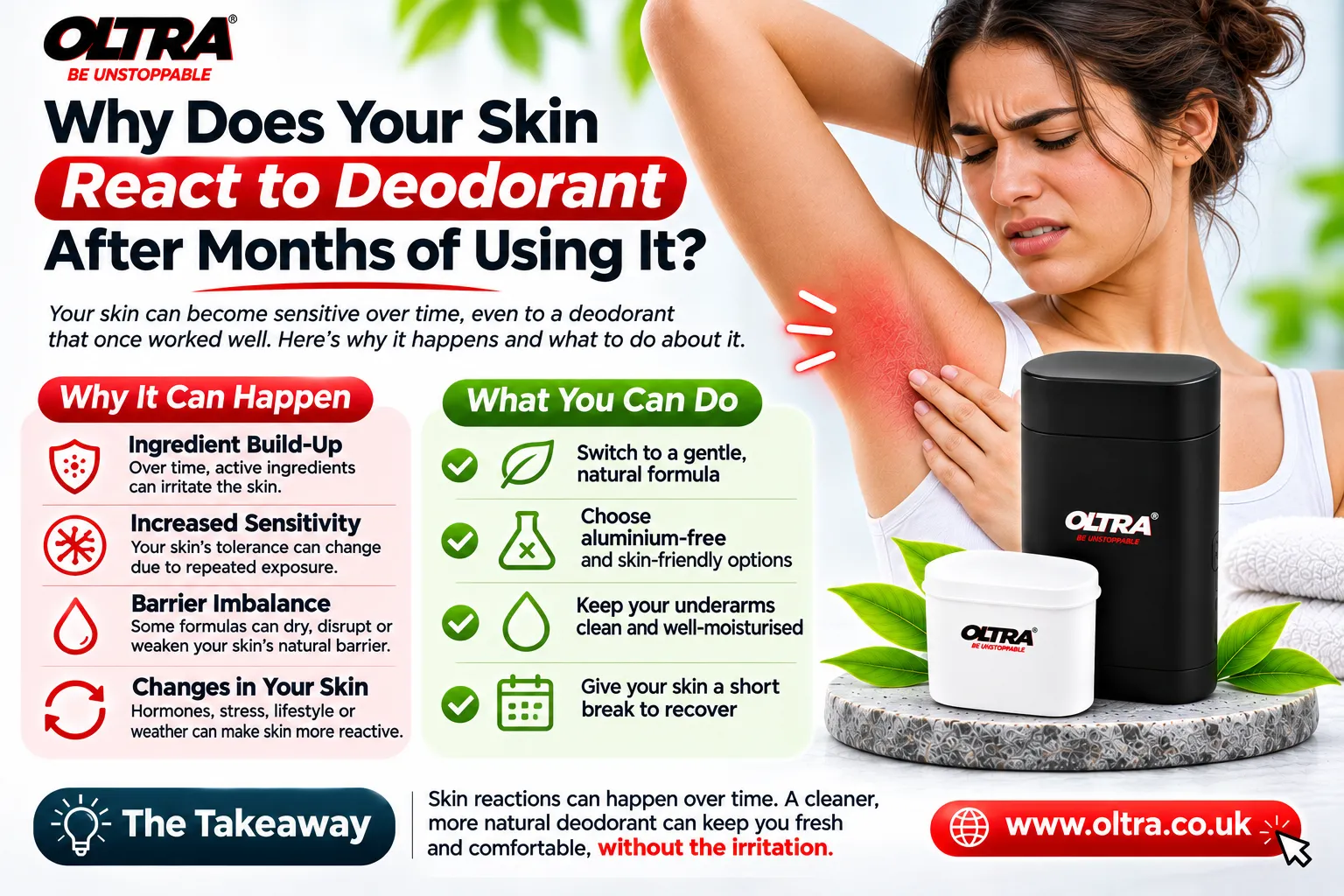
It feels unfair, but it’s surprisingly common. Skin doesn’t always react to a product straight away. Sensitivity can build quietly over time until it suddenly shows itself, and other changes in your routine can tip the balance too.
If you’re now hunting for a sensitive skin deodorant, understanding why this happens will help you choose a replacement that doesn’t land you back in the same spot a few months from now.
Yes, You Can Become Sensitive to a Product You’ve Used for Ages
It sounds odd, but your skin can start reacting to an ingredient it has handled without complaint for months or even years.
The usual explanation is allergic contact dermatitis. With repeated exposure, your immune system can gradually learn to treat a particular ingredient as a threat. This learning stage, called sensitisation, happens silently. You only find out once it’s complete and your skin starts reacting every time it meets that ingredient.
Two Types of Reaction
Irritant contact dermatitis happens when something wears down or disrupts your skin’s protective barrier. Frequent washing, regular shaving and repeated contact with harsh ingredients can all add up over time.
Allergic contact dermatitis is an immune response to one specific ingredient. One telltale sign is timing: symptoms can appear hours or even a day or two after you apply the product, rather than straight away.
The two can look very similar, and it isn’t possible to tell them apart reliably just by looking. If reactions keep happening, a professional assessment is worthwhile.
What Else Might Have Changed?
Your deodorant may be the same, but plenty of other things in your life may not be.
Build-up of exposure. Some allergies only develop after long-term contact. Fragrance ingredients are a well-known example. You might use a scented product happily for a year before sensitisation kicks in.
Shaving habits. Shaving more often, using a blunt blade or applying deodorant straight afterwards can all damage the skin’s surface and leave it more reactive.
Heat, sweat and friction. A hot spell, a new exercise routine or tighter clothes can increase moisture and rubbing. That alone can make a product that used to feel fine start to sting.
Other products. A new shower gel, laundry detergent or body lotion might be the real culprit. It’s easy to blame the deodorant when something else touching your underarms has changed.
It’s worth thinking back over the last few weeks before you decide what’s to blame.
Ingredients Commonly Behind Delayed Reactions
Pinning down a likely trigger makes it far easier to pick a replacement.
Fragrance and Essential Oils
Perfume ingredients are among the most common causes of allergic contact dermatitis. Natural essential oils are no exception, as many contain the same fragrance allergens. If scented products keep causing trouble, fragrance-free is the most sensible switch.
Sodium Bicarbonate
Baking soda appears in many natural deodorants because it’s good at tackling odour. Lots of people use it without issue, but others develop irritation, sometimes only after weeks of daily use. A bicarbonate-free formula is worth trying if you suspect it.
Alcohol, Preservatives and Plant Extracts
Some alcohol-based formulas sting on damaged skin. Preservatives and botanical extracts can also cause reactions in some people. Remember that “natural” and “aluminium-free” on the label don’t mean a product will suit every skin type.
What to Do When Your Usual Deodorant Turns on You
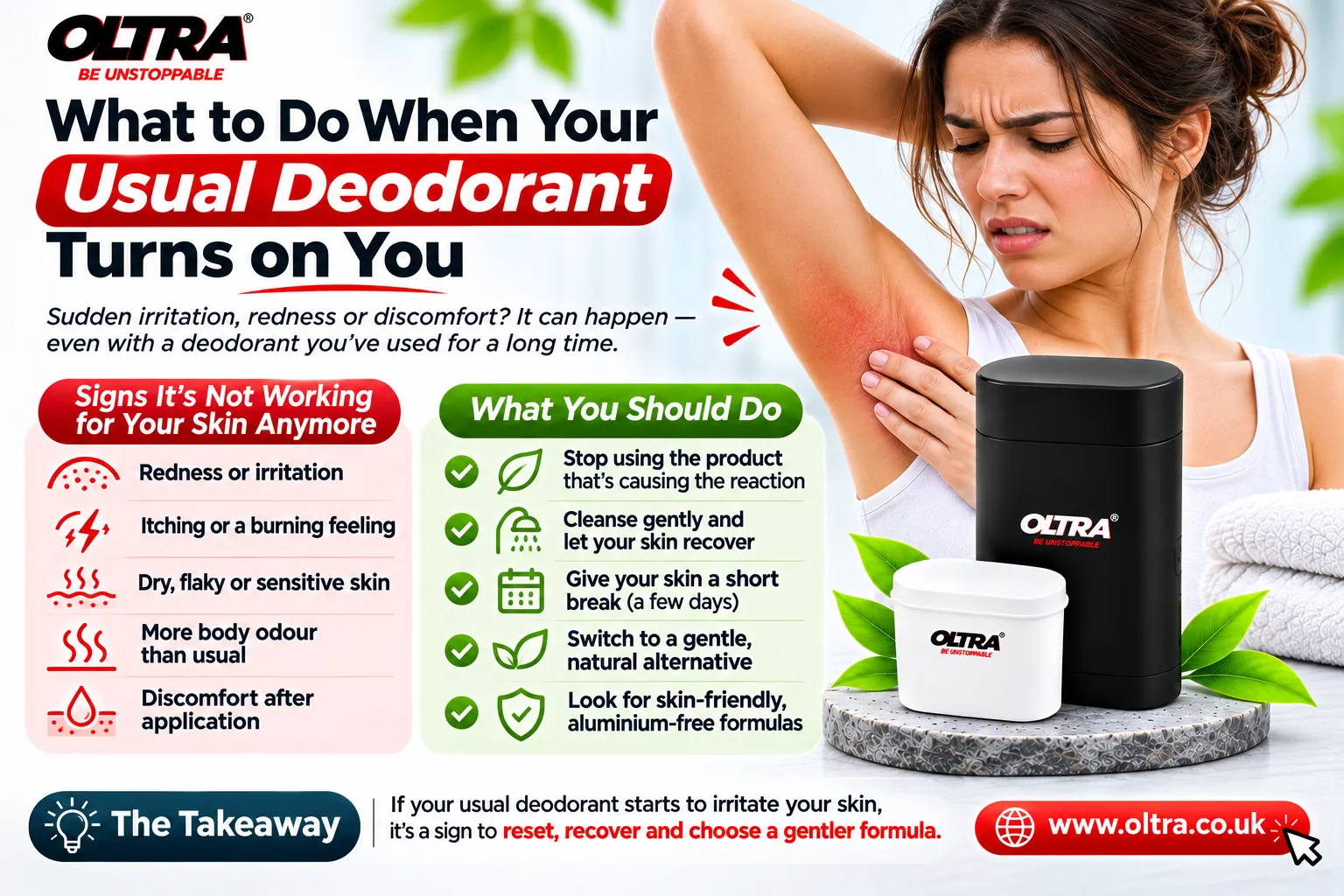
Pushing through the discomfort usually makes things worse. Instead:
- Stop using the product you suspect so your skin can calm down.
- Wash gently with a mild, unscented cleanser and avoid scrubbing.
- Take a break from shaving while the skin is inflamed.
- Keep things simple by cutting back on other products in that area.
- Compare ingredient lists of anything that has caused problems, looking for shared ingredients.
- Get advice if the rash persists or keeps returning. A dermatologist can arrange patch testing to identify specific allergies.
Resist the urge to try several new deodorants while your skin is still sore. You won’t be able to tell what’s helping and what’s making it worse.
Choosing a Deodorant for Sensitive Skin
Picking the right deodorant for sensitive skin takes a little more thought than grabbing whatever says “gentle” on the front.
Read the whole label. Words like “clean”, “natural” or “gentle” aren’t regulated promises. Look at the full ingredient list and compare it with products your skin has tolerated in the past.
Go fragrance-free if scent is a suspect. Choose a formula without added perfume or essential oils.
Try bicarbonate-free if baking soda has caused soreness. Look for products that use other ways to control odour.
Wait before testing anything new. Let your skin recover fully first. If you’ve had repeated bouts of contact dermatitis, ask a pharmacist or dermatologist about proper testing rather than trial and error on sore skin.
Is Natural Deodorant the Answer?
It can be part of the answer, but it isn’t a guarantee.
A natural deodorant for sensitive skin appeals to many people who want to avoid conventional antiperspirants or certain ingredients. But plant-derived ingredients can still cause irritation or allergies.
The same goes for aluminium-free products. They manage odour rather than reducing sweat, but taking aluminium out doesn’t remove fragrance allergens or other possible irritants. What matters most is whether the full formula suits your skin.
Why Choose Us?
We created OLTRA Guard so people with reactive underarms could choose a formula around their skin, rather than the other way round.
- Natural and aluminium-free. OLTRA Guard is a deodorant, not an antiperspirant. It focuses on odour and lets your body sweat normally.
- Standard or Bi-Carb-Free. If baking soda has caused you problems, you can choose our Bi-Carb-Free formula.
- Fragrance-free Core. Our Core option has no added scent, ideal if you suspect fragrance is your trigger.
- Reusable applicator. Keep the applicator and swap in replaceable refills, so you’re not buying a new container each time.
- Room to switch. If your skin’s needs change, you can try a different formula without starting from scratch.
No deodorant can promise to prevent irritation for everyone, so always check the ingredients of the option you choose before using it.
When to See a Professional
Mild irritation often settles once you stop using the product behind it. Speak to a pharmacist, GP or dermatologist if symptoms last, keep coming back, or include painful cracking, spreading redness or noticeable swelling.
A dermatologist may suggest patch testing to find out exactly what you’re allergic to. Knowing your trigger saves you from endlessly switching products without fixing the problem.
Frequently Asked Questions
Can deodorant suddenly cause an allergic reaction?
Yes. Allergic contact dermatitis can develop after repeated exposure to an ingredient, even if you’ve used the product for months without any issues.
Why would a deodorant I’ve used for years start irritating me?
Your immune system may have become sensitised to one of its ingredients over time. Changes in shaving, clothing, weather or other products can also play a part. The manufacturer may also have updated the formula, so check the label.
Does switching to aluminium-free deodorant prevent irritation?
Not necessarily. Aluminium-free deodorants can still contain fragrance, baking soda or other ingredients that cause reactions.
How long does it take for underarm irritation to heal?
Mild irritation often improves within days of stopping the product. If it hasn’t settled within a week or two, or is getting worse, get it checked.
Should you stop using deodorant when your underarms itch?
Yes, stop using the product you suspect until your skin settles. Seek medical advice if symptoms persist or worsen.
Final Thoughts
A sudden reaction to a deodorant you’ve trusted for months can be baffling, but it rarely comes out of nowhere. Repeated exposure, shaving, friction and changes elsewhere in your routine can all build up until your skin finally says enough.
Give your underarms time to recover, work out what might be triggering the reaction and choose your next product based on your skin’s needs rather than the loudest marketing claim.