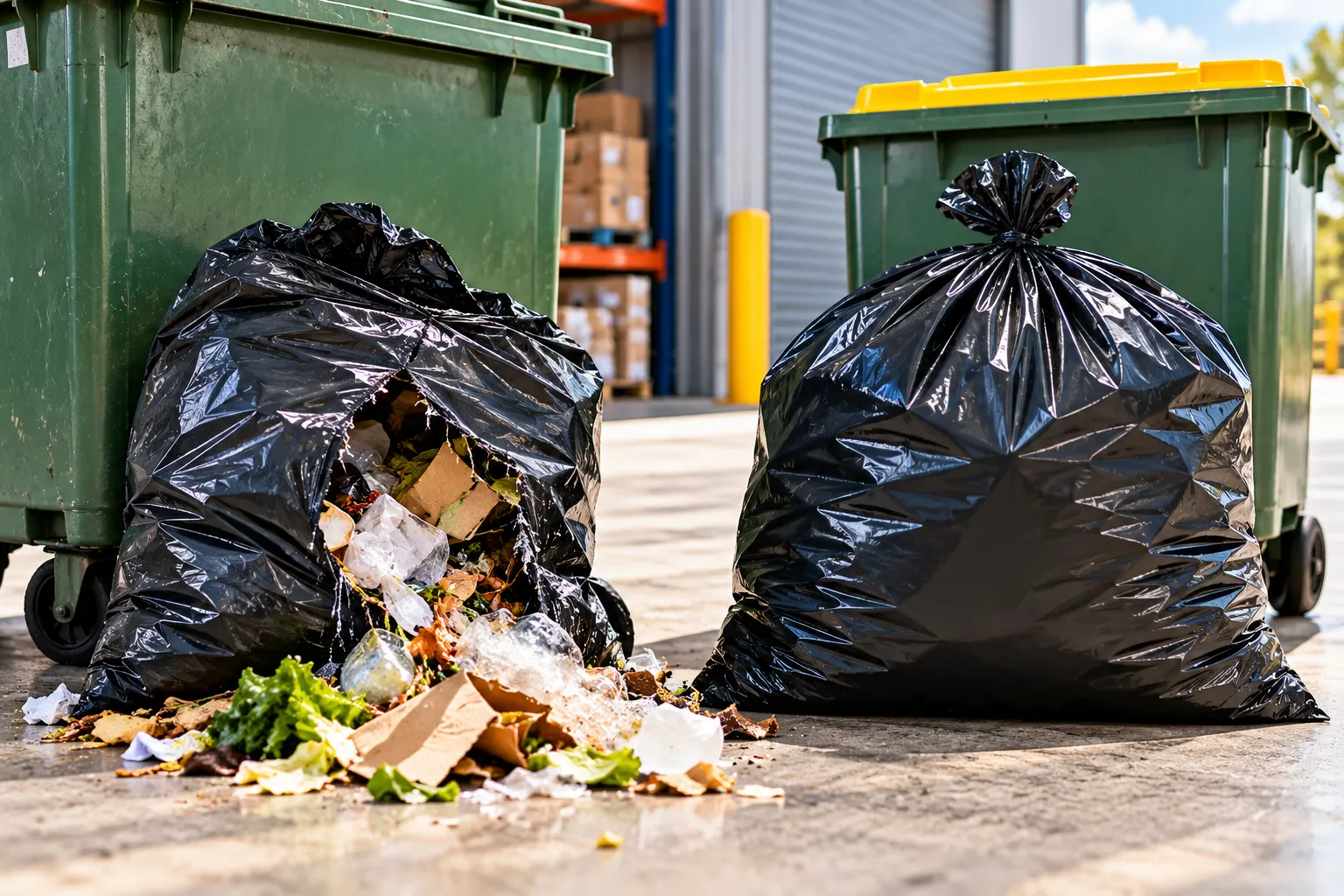
Quick answer: Most commercial bin bag failures come from five causes: the wrong size, the wrong grade for the waste, overfilling, sharp items in general waste, or a damaged bin. Look at where the bag fails, fix that cause first, and only move to a thicker liner if correctly fitted bags still split under normal loads.
When bags keep splitting, the reflex is to order heavy duty commercial bin liners and hope the problem goes away. Sometimes that’s right. Just as often, the new, thicker bags split too, because the real problem was the size, the bin or the way waste goes in.
Bag failures leave clues: where and when a bag gives way usually tells you why.
Start by Looking at Where the Bag Fails
Before changing products, watch what actually happens:
| What happens | Likely cause | What to try |
| Tears at the rim as it’s fitted | Liner too narrow for the opening | A wider size, not a thicker bag |
| Slips down inside the bin | Too short or too narrow to fold over the rim | Check length and width against the bin |
| Bottom splits when lifted | Load too heavy for the grade | Empty more often, or step up a grade |
| Holes along the sides | Sharp or hard waste | Separate that waste, check the bin walls |
| Tears in the same spot every time | Damaged bin | Inspect and repair or replace the bin |
| Leaks onto the floor | Punctures or free liquid in the bag | Drain liquids first, review the grade |
Fix the cause in the right-hand column first. It’s cheaper than upgrading every bag on site.
Size Problems Often Look Like Strength Problems
A liner stretched tight around a rim is already under strain before any rubbish goes in. Add a few kilos and it tears, which looks like a weak bag but is really a fit problem.
Bin liners are sold by litres, but bins aren’t built to a standard shape. Turnstone Products’ 54L and 72L heavy duty liners, for example, are both 910 mm long, but the 54L is 640 mm wide and the 72L is 760 mm wide. If a 54L bag reaches the bottom of your bin but strains at the rim, the wider 72L will fix it. A thicker 54L won’t.
Measure the bin’s opening and depth, compare them with the liner’s flat dimensions, and make sure there’s enough material to fold over the rim.
When a Thicker Liner Is the Right Fix
Step up a grade when correctly sized bags still split under normal use, when full bags are lifted out and carried, when waste is wet or heavy, or when cleaners have started double-bagging out of habit.
For commercial bin bags, the usual step is from 25 micron heavy duty to 30 micron extra heavy duty, with 38 micron super heavy duty for the toughest loads. It helps when a supplier keeps grades in the same bag size. Turnstone’s 72L liner, for instance, comes in four grades from 20 to 38 micron, all at 910 × 760 mm, so a site can change strength without changing fit.
Wheelie Bins at the Loading Dock
Large bins expose problems faster because a single failure dumps a lot of waste. When choosing heavy duty wheelie bin liners, think about how waste goes in. A 240L bin holding smaller bags that are already tied puts far less stress on its liner than one filled with loose cardboard, strapping and food waste.
Turnstone’s 240L liners come in 25 micron heavy duty and 30 micron extra heavy duty, both at 1450 × 1150 mm. Use the heavier grade for loose waste. Either way, wheel the bin to collection rather than lifting a full 240L bag by hand.
Overfilling, Sharp Waste and Damaged Bins
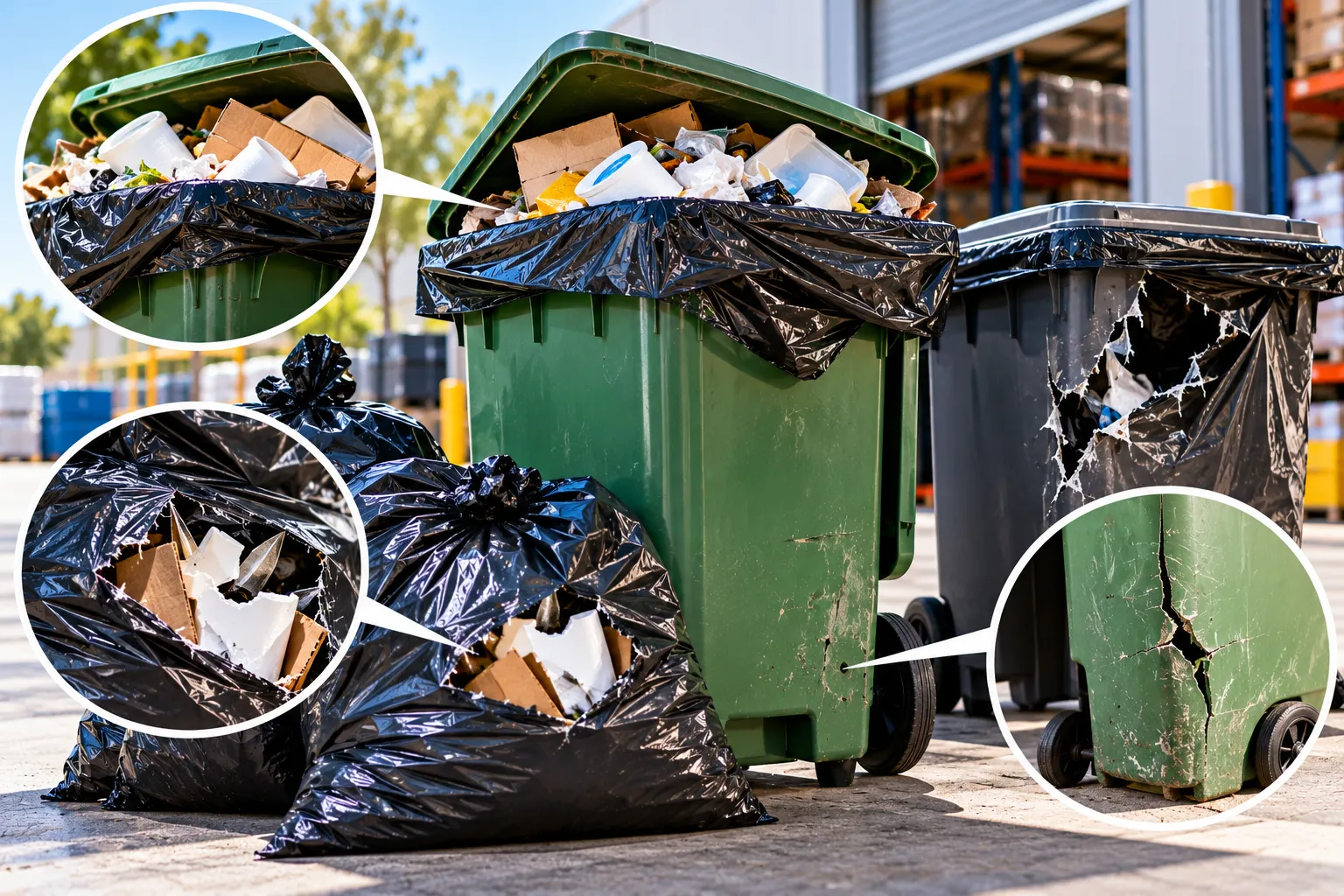
Overfilling. In busy kitchens and venues, staff often keep stuffing a bin to avoid a bag change. Leave enough room to tie the bag comfortably, empty bins more often during peak periods, and add an extra bin where one is always overflowing.
Sharp waste. Broken glass, metal strapping and splintered pallet timber will puncture any plastic liner, whatever its thickness. Give that waste its own rigid container, and never push rubbish down by hand.
Damaged bins. Cracked walls, exposed screws and rough rims catch liners every time they go in or come out. If bags tear in the same spot, check that spot on the bin before changing the liner.
Getting the Right Liners in Perth
Turnstone Products, a West Australian family-owned supplier based in Neerabup, stocks 16 bin liner sizes and grades, from 18L kitchen tidy bags to 240L wheelie bin liners. They’re supplied by the carton, multi-carton or pallet, with next-day delivery across Perth metro. Businesses contact the team for bulk quotes and help confirming the right size and grade.
Frequently Asked Questions
Why do my bin bags keep splitting?
Bin bags usually split because they’re the wrong size for the bin, too light a grade for the waste, overfilled, or punctured by sharp items. A damaged bin can also cause repeated tears in the same spot. Check the fit and the waste going in before buying a thicker bag.
Why does my bin liner keep slipping into the bin?
A liner slips when it’s too short or too narrow to fold securely over the rim, so the weight of the rubbish drags it down. Measure the bin’s depth and opening, then choose a liner long enough to reach the base with extra material to fold over the edge.
Are heavy duty commercial bin liners better than double-bagging?
Usually, yes. One correctly sized heavy duty liner often costs less than two lighter bags and uses less plastic. Double-bagging also hides the real problem, such as poor fit or sharp waste. If single heavy duty liners still fail, check the size and the bin before stepping up to extra heavy duty.
Can you put broken glass in a bin bag?
Loose broken glass shouldn’t go straight into an ordinary bin bag, because it can cut through the plastic and injure whoever handles it. Wrap it securely or use a rigid, puncture-resistant container, and follow your commercial waste collector’s rules for glass.
Final Thoughts
A split bag is a symptom, not the whole story. Check the fit, the waste, the bin and the handling first, then choose the grade. Get those right and you’ll use fewer bags, clean up fewer spills and stop double-bagging for good.